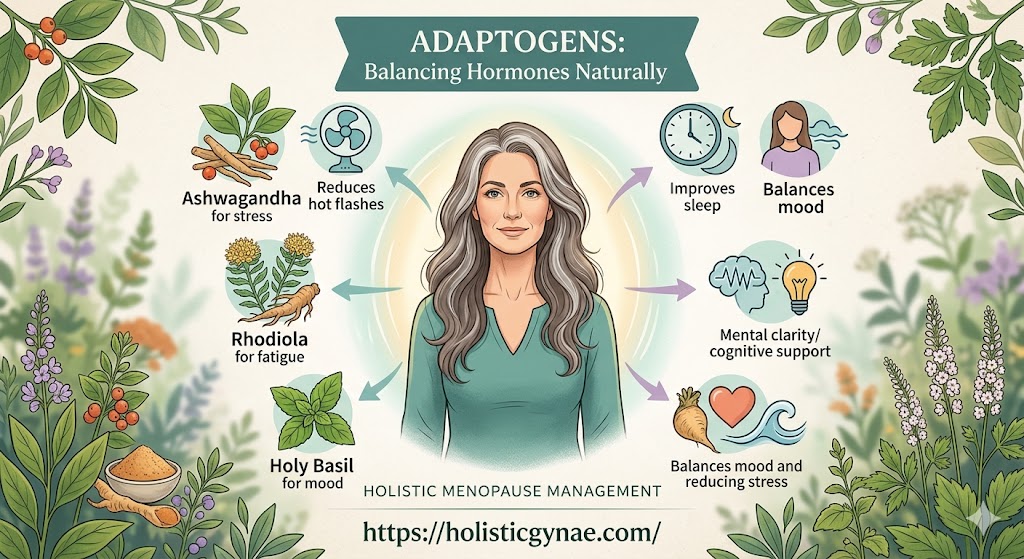
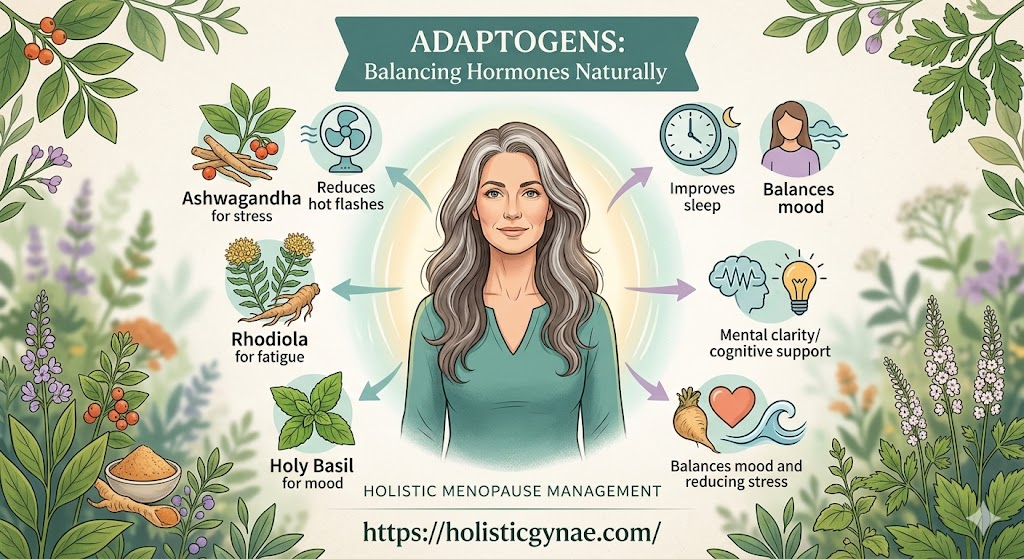
Managing Perimenopause and Menopause Symptoms with Adaptogens: A Patient Information Guide
Perimenopause and menopause are natural, biological transitions in a woman's life, marked by a decline in ovarian hormone production—primarily estrogen and progesterone. This hormonal shift can trigger a wide array of physical and emotional symptoms, including hot flashes, night sweats, mood swings, fatigue, sleep disturbances, and brain fog.
While Hormone Replacement Therapy (HRT) is a common medical intervention, many individuals seek complementary options to manage their symptoms. Adaptogens—a unique class of herbal medicines—have gained significant attention for their ability to help the body adapt to stress, regulate cortisol levels, and support hormonal balance.
This guide provides an evidence-based overview of how specific adaptogens work, how to dose them, when to take them, and vital safety considerations.
What Are Adaptogens?
To be classified as an adaptogen, a plant must meet three specific criteria:
Non-toxic: It must be safe for long-term use in normal doses.
Broad-spectrum stress resistance: It helps the body cope with physical, chemical, or biological stressors.
Normalizing effect: It exerts a balancing influence on the body, calming overactive systems (like high cortisol) or stimulating underactive ones.
During menopause, the drop in estrogen acts as a profound chronic stressor on the central nervous system and the adrenal glands. Adaptogens help stabilize the Hypothalamic-Pituitary-Adrenal (HPA) axis, easing the transition.
Detailed Guide to Menopausal Adaptogens
1. Ashwagandha (Withania somnifera)
Ashwagandha is one of the most thoroughly researched adaptogens for anxiety, sleep, and stress management.
Mechanism of Action: It modulates the HPA axis and mimics GABA (a calming neurotransmitter). It lowers elevated cortisol levels, reduces anxiety, improves sleep quality, and has been shown in studies to support mild estrogenic activity to help reduce hot flashes.
Standard Dosage: 300 mg to 600 mg of a standardized root extract (e.g., KSM-66) daily.
Timing: Best taken in the evening or about 1 to 2 hours before bed due to its calming, sleep-inducing properties. It can also be split into morning and evening doses if daytime anxiety is severe.
Side Effects: Generally well-tolerated. May cause mild gastrointestinal upset (nausea, diarrhea) in high doses, or mild drowsiness.
Interactions: May potentiate the effects of sedatives, anti-anxiety medications (benzodiazepines), and thyroid medications.
Precautions & Contraindications:
Thyroid Disorders: Ashwagandha can stimulate thyroid hormone production. People with hyperthyroidism should avoid it; those with hypothyroidism on medication should monitor their levels closely.
Autoimmune Diseases: It can stimulate the immune system, so individuals with lupus, rheumatoid arthritis, or multiple sclerosis should use it with caution or avoid it.
2. Black Cohosh (Actaea racemosa)
Note: While traditionally classified as a uterine tonic/herbal remedy, Black Cohosh is frequently grouped with adaptogens for its ability to normalize neuroendocrine function during menopause.
Mechanism of Action: It acts primarily as a central nervous system modulator, interacting with serotonin, dopamine, and opiate receptors to regulate the body's thermostat. It does not significantly change systemic estrogen levels, making it a safer option for many.
Standard Dosage: 20 mg to 40 mg of standardized extract (containing 2.5% triterpene glycosides) twice daily.
Timing: Taken twice a day—once in the morning and once in the evening.
Side Effects: Mild headaches, stomach upset, or weight heaviness.
Interactions: May interact with medications metabolized by the liver or high-dose cholesterol-lowering statins.
Precautions & Contraindications:
Liver Disease: There have been rare, isolated reports of liver toxicity associated with Black Cohosh. Anyone with pre-existing liver disease or those consuming high amounts of alcohol should avoid it. Discontinue use immediately if jaundice (yellowing of skin/eyes) or dark urine develops.
3. Rhodiola Rosea (Rhodiola rosea)
Rhodiola is an ideal adaptogen for women struggling with menopause-related fatigue, low mood, and "brain fog."
Mechanism of Action: It enhances the availability of serotonin, dopamine, and norepinephrine in the brain. It improves cellular energy (ATP) production, helping to combat physical exhaustion and mental burnout.
Standard Dosage: 100 mg to 300 mg of a standardized extract (containing 3% rosavins and 1% salidroside) daily.
Timing: Must be taken early in the day (with breakfast or lunch). Because it is highly stimulating, taking it in the afternoon or evening can disrupt sleep.
Side Effects: Can cause mild restlessness, irritability, insomnia, or dry mouth if the dose is too high.
Interactions: May interact with selective serotonin reuptake inhibitors (SSRIs) or other antidepressants, potentially causing serotonin syndrome. It may also lower blood sugar, interacting with diabetes medications.
Precautions & Contraindications:
Bipolar Disorder: Due to its stimulating and mood-elevating properties, Rhodiola can trigger manic episodes in individuals with bipolar disorder.
4. Maca Root (Lepidium meyenii)
Maca is a Peruvian cruciferous root vegetable traditionally used to support energy and libido.
Mechanism of Action: Maca does not contain phytoestrogens; instead, it acts as an endocrine adaptogen, supporting the pituitary gland and hypothalamus to optimize the body's own hormone production. It is highly valued for improving sexual desire, vaginal dryness, and mild mood fluctuations.
Standard Dosage: 1,500 mg to 3,000 mg of gelatinized maca powder (or equivalent extract) daily. (Gelatinized maca is cooked to remove starches, making it easier to digest).
Timing: Best taken in the morning or early afternoon due to its natural energy-boosting effects.
Side Effects: Mild bloating, gas, or a feeling of jitteriness if taken in excess.
Interactions: No significant known drug interactions, though it may alter thyroid function if consumed raw in massive amounts due to goitrogens (avoided by using gelatinized maca).
Precautions & Contraindications:
Hormone-Sensitive Conditions: While it doesn't contain plant estrogens, some studies suggest it may alter hormonal pathways. Women with active estrogen-receptor-positive breast, uterine, or ovarian cancer should consult their oncologist before use.
5. Holy Basil / Tulsi (Ocimum sanctum)
Holy Basil is excellent for women experiencing perimenopausal emotional volatility, "wired but tired" states, and stress-related weight gain.
Mechanism of Action: It lowers elevated cortisol levels and acts as a mild anti-inflammatory agent. It stabilizes blood sugar levels and supports emotional resilience.
Standard Dosage: 300 mg to 600 mg of standardized extract daily, or 1–2 cups of Tulsi tea.
Timing: Can be taken at any time of day. Morning use helps manage daily stress, while evening use can calm a racing mind before sleep.
Side Effects: Nausea or mild digestive distress if taken on an empty stomach.
Interactions: May enhance the effects of blood-thinning medications (anticoagulants) and diabetes medications (hypoglycemics).
Precautions & Contraindications:
Bleeding Disorders: Holy Basil may slow blood clotting. Stop taking it at least two weeks before any scheduled surgery.
Fertility: If perimenopausal and still actively trying to conceive, note that Holy Basil may have a mild antifertility effect in high doses.
Quick Reference Summary Table
Adaptogen
Key Benefit
Typical Daily Dose
Best Time of Day
Major Precaution
Ashwagandha
Anxiety, sleep, stress
300–600 mg
Evening / Night
Avoid in Hyperthyroidism
Black Cohosh
Hot flashes, night sweats
40–80 mg
Split Morning & Night
Avoid in Liver Disease
Rhodiola
Fatigue, brain fog, mood
100–300 mg
Morning only
Avoid in Bipolar Disorder
Maca Root
Libido, energy, dryness
1,500–3,000 mg
Morning
Caution in Hormone-Sensitive Cancers
Holy Basil
Mood swings, cortisol spike
300–600 mg
Anytime
Stop 2 weeks before surgery
Safety and Best Practices
Source Matters: Herbal supplements are not strictly regulated by the FDA in the same manner as prescription drugs. Always purchase adaptogens from reputable brands that utilize third-party testing (such as USP, NSF, or ConsumerLab) to ensure purity and accuracy of dosage.
Start Low and Go Slow: Introduce one adaptogen at a time. Start at the lowest recommended dose to observe how your body responds before increasing it.
Cycle Your Adaptogens: Because adaptogens modulate hormonal and stress pathways, many herbalists recommend cycling them (e.g., taking them for 6 to 8 weeks, followed by a 1-week break) to prevent your body from building a tolerance.
Consult Your Healthcare Provider: This guide is for informational purposes only. It is vital to discuss any new supplements with your doctor, gynecologist, or a certified herbalist, especially if you are currently taking prescription medications, HRT, or have a chronic underlying medical condition.
Dr Anupriya Agarwal
Senior Obstetrician & Gynaecologist
IVF Clinician | MBBS |MS (O&G) | FRCOG (UK)
Compassionate & Evidence-Based Care for Every Chapter of Womanhood - from Puberty to Fertility and Beyond.
This article has been medically reviewed by Dr Anupriya Agarwal
Dr Anupriya is an award-winning fertility specialist with over 25 years of expertise in managing complex fertility issues and an advanced gynaecological laparoscopic and hysteroscopic surgeon.