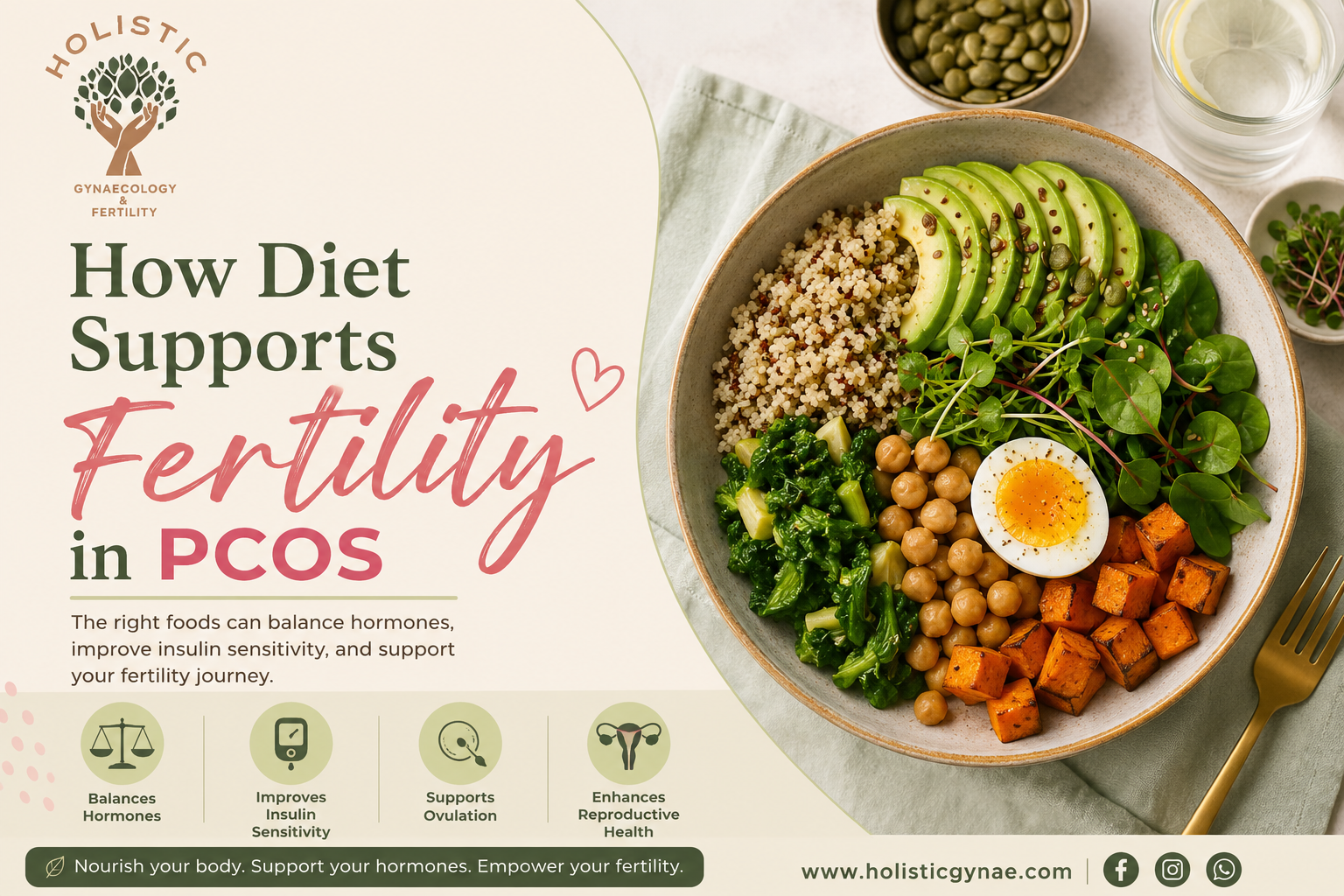
Clinical Value of Fertility-Specific Diet Interventions
Integrating fertility-specific diet sections into the leaflet adds significant clinical value, particularly for patients with PCOS, endometriosis, or uterine fibroids. The evidence supporting dietary interventions is especially strong for PCOS and endometriosis, providing meaningful ways to support fertility outcomes. Below are three comprehensive, fertility-specific diet sections designed for inclusion at the end of each condition's discussion in the guide.
Note: For any serious condition or panic situation, kindly go for professional advice before deciding to go for Fibroid Removal Surgery Singapore and any other medical treatments.
Polycystic Ovary Syndrome (PCOS) is one of the most common causes of ovulatory infertility. Encouragingly, lifestyle and dietary interventions are among the most effective first steps for restoring ovulation and improving conception chances.
Insulin resistance is a central factor in anovulation for PCOS. Elevated insulin levels increase androgen production, disrupting normal follicle development. Dietary strategies that improve insulin sensitivity can directly restore ovulation. Key approaches include:
The "fertility diet" emphasises monounsaturated fats over trans fats, plant-based proteins over animal proteins, low-glycaemic carbohydrates, and high-fat dairy. This pattern has been linked to lower rates of ovulatory infertility and improved pregnancy outcomes in women trying to conceive.
| Nutrient | Fertility Benefit | Sources |
| Myo-inositol (2–4g/day) | Improves ovulation rate (~58%), menstrual regularity, and oocyte quality in IVF | Supplement only |
| Vitamin D (1,000–4,000 IU/day) | 67–85% of women with PCOS are deficient; correction improves ovulation and follicular development | Fatty fish, eggs, fortified foods |
| Omega-3 fatty acids | Reduce androgen levels and inflammation; may improve oocyte quality | Oily fish, flaxseeds, walnuts |
| Folic acid (400–800 mcg/day) | Essential for neural tube development when pregnancy is achieved | Leafy greens, legumes, fortified cereals |
| Antioxidants (CoQ10, vitamins C & E) | Support egg quality by reducing oxidative stress on developing follicles | Nuts, seeds, colourful vegetables |
Important: Supplements should only be taken under the guidance of your doctor, especially when trying to conceive.
Food sequencing strategies-such as eating non-starchy vegetables and proteins before carbohydrates-help reduce post-meal insulin spikes. This supports symptom management and creates a more favourable hormonal environment for natural ovulation.
For women with PCOS undergoing Assisted Reproductive Technology (ART), adopting a healthy dietary pattern before treatment may help optimise oocyte quality and endometrial receptivity. Research, including a Singapore-based multi-ethnic cohort study, suggests that women with PCOS may have better ART outcomes and higher oocyte retrieval rates than normo-ovulatory women, even at older ages, making pre-ART lifestyle optimisation especially worthwhile.
Endometriosis affects fertility in 30–50% of women with the condition, mainly through inflammation, altered ovarian function, distorted pelvic anatomy, and impaired embryo implantation. Diet may play a meaningful supportive role in improving the conditions for conception.
Chronic low-grade inflammation is a hallmark of endometriosis, directly affecting ovarian function, egg quality, and early reproductive stages. An anti-inflammatory dietary approach can help create a more favourable environment for conception by:
Women who closely follow a "fertility diet"-rich in vegetable proteins, low-GI carbohydrates, monounsaturated fats, and multivitamins-have significantly lower odds of endometriosis (54–66% lower) compared to those with lower adherence. Specifically:
The ongoing DANTE Study is evaluating whether a 12-week anti-inflammatory Mediterranean diet before IVF can improve oocyte retrieval, embryological parameters, pregnancy and live birth rates, and reduce systemic inflammation. While results are pending, the hypothesis is that anti-inflammatory nutrition reduces ovarian inflammatory burden and creates more favourable conditions for IVF success.
For women with endometriosis who achieve pregnancy, diet continues to matter. A large Japanese study found that women following the most anti-inflammatory dietary pattern in the preconception period experienced reduced risk of preterm birth, reduced risk of low birth weight, and improved overall well-being during pregnancy.
Takeaway: Starting an anti-inflammatory diet before trying to conceive, not just during pregnancy, appears to offer the greatest benefit for both fertility and pregnancy outcomes in endometriosis.
| Nutrient | Fertility Benefit | Sources |
| Omega-3 fatty acids | Reduce inflammatory prostaglandins; may improve oocyte quality | Oily fish, walnuts, and chia seeds |
| Folate/Folic acid | Essential for neural tube formation; may also reduce endometriosis-related DNA damage | Leafy greens, legumes, fortified cereals |
| Vitamin D | Low levels common in endometriosis; supplementation reduces inflammation and may support implantation | Fatty fish, eggs, fortified dairy |
| Antioxidants (vitamins C & E) | Reduce oxidative stress that impairs egg quality and fertilisation | Berries, citrus, nuts, seeds |
| Vegetable proteins | Associated with dramatically lower odds of endometriosis | Legumes, tofu, tempeh, nuts |
Always discuss supplements with your doctor before trying to conceive.
Uterine fibroids can affect fertility, with the impact depending on their size, number, and location. Fibroids contribute to infertility in 5–10% of women with difficulty conceiving and may be the sole cause in 2–3% of cases.
| Fibroid Type | Location | Impact on Fertility |
| Submucosal | Protrudes into uterine cavity | Highest impact associated with up to 70% reduction in conception rates |
| Intramural | Within the uterine wall | Moderate impact-may halve ongoing pregnancy rates after ART if large |
| Subserosal | On the outer uterine wall | Minimal to no impact on fertility |
While diet cannot directly shrink fibroids or reverse their mechanical effects on fertility, a healthy dietary pattern may support fertility by:
| Nutrient | Relevance | Sources |
| Iron | Heavy bleeding causes deficiency; anaemia impairs fertility and pregnancy | Lean red meat (moderate), legumes, tofu, dark leafy greens |
| Vitamin D | Deficiency is a risk factor for fibroid development; it may reduce recurrence risk | Fatty fish, eggs, fortified dairy, UV-exposed mushrooms |
| Folate/Folic acid | Essential for early foetal development once conception occurs | Leafy greens, legumes, fortified cereals |
| Omega-3 fatty acids | Anti-inflammatory; may support endometrial health and receptivity | Oily fish, flaxseeds, walnuts |
| Antioxidants | Support egg quality and reduce oxidative stress in the fibroid-affected uterine environment | Colourful fruits & vegetables, green tea |
Diet alone cannot overcome the mechanical barrier that a submucosal or large intramural fibroid creates for conception. If you have fibroids and are trying to conceive, it is important to:
Key message: Diet is a valuable supportive tool, but for fibroids affecting the uterine cavity, medical or surgical fibroids treatment in Singapore is equally important before trying to conceive.
| PCOS | Endometriosis | Uterine Fibroids | |
| Key dietary goal | Improve insulin sensitivity; restore ovulation | Reduce inflammation; improve egg quality | Reduce oestrogen; correct anaemia; support endometrial health |
| Best dietary pattern | Mediterranean / low-GI, "fertility diet." | Mediterranean / anti-inflammatory, "fertility diet" | Whole-food, plant-rich, anti-inflammatory |
| Key fertility nutrients | Myo-inositol, vitamin D, omega-3, folate | Omega-3, vitamin D, folate, antioxidants | Iron, vitamin D, folate, omega-3 |
| Food sequencing? | ✅ Strongly recommended | Not specifically studied | Not specifically studied |
| Fertility diet evidence | Reduces ovulatory infertility risk | 54–66% lower odds of endometriosis | Reduces oestrogen load; supports uterine environment |
| ART / IVF support | Better outcomes with lifestyle optimisation | DANTE trial underway - promising | Fibroid location is key; diet is adjunctive |
| Weight management | 5–10% loss restores ovulation | Supportive role | Reduces oestrogen from adipose tissue |
| When to see a specialist | If no ovulation after 3–6 months of lifestyle changes | If trying to conceive with known endometriosis | If any fibroid distorts the uterine cavity |

© 2025 Holistic Gynaecology & Fertility. All Rights Reserved.


Monday - Friday | 09:00am - 01:00pm, 02:00pm - 05:00pm
Saturday | 09:00am - 01:00pm
Sunday & Public Holidays | Closed


